Cart
The alarm exploded in the dark and for a few seconds I wondered why I do this to myself. Then I remembered the elk. I grabbed my gear, stepped into the cold, and climbed into Alan Taylor’s car. He drove, and I rode shotgun as we headed toward Cataloochee Valley in the Great Smoky Mountains National Park.
The road into the valley was ink black, our headlights carving a narrow tunnel through the forest. Above us the stars burned sharp and bright, like someone had spilled diamonds across the sky. I cracked the window and breathed in cold air, damp leaves, and a hint of wood smoke from some distant cabin.
Before sunrise we parked and glassed the open fields, searching for any sign of elk. For a while the meadows looked empty. Then we remembered the stretch of Cataloochee that was still closed to cars after Hurricane Helene and the slow moving repair work. With no traffic, that quiet ground just might belong to the elk.
We slung our packs and hiked past the gate. Frost snapped under our boots. The valley smelled like wet earth and winter grass, each breath floating in front of us like steam. As the sky lightened, shapes began to form in the far field. Elk.
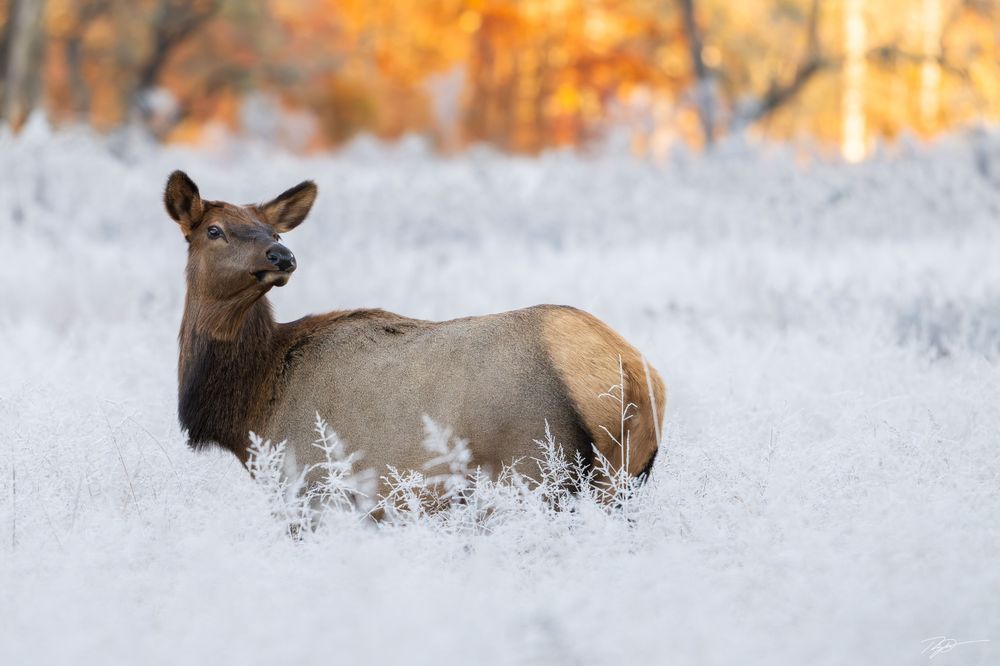
They were bedded down and dusted with frost, their coats glowing soft blue in the early light. The valley was silent except for the crunch of ice and a few birds waking in the trees. When the first edge of sunlight broke over the ridge, the elk rose and began to wander through the white meadow, late fall foliage blazing gold and orange behind them.
I raised my camera and started to work. It felt like standing inside a cathedral of fog and light, watching God paint with frost and fire in the heart of Cataloochee Valley. The lack of sleep, the cold, the long drive, all of it faded. The true hero of the story was the land itself, and I was there to listen and bring back proof that mornings like this still exist.