Cart
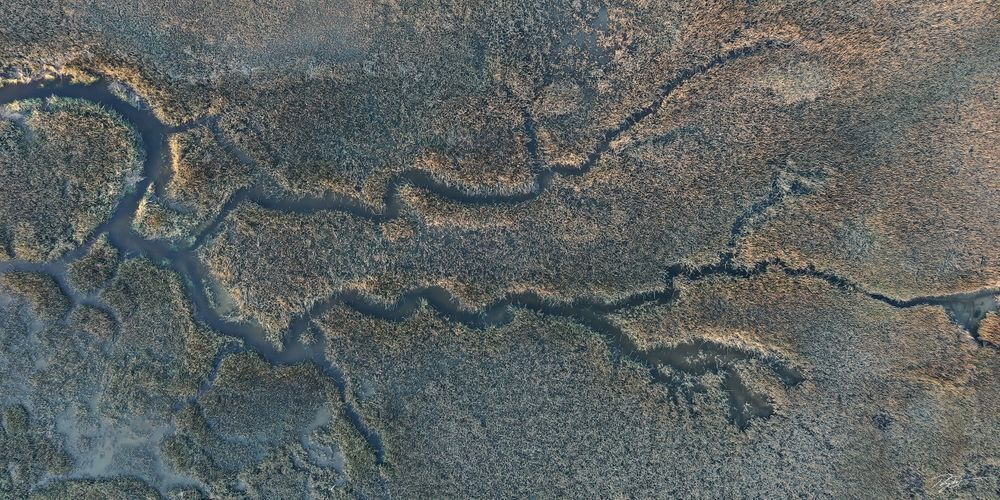
I went looking for a photograph, but from the air, I discovered something that felt more like a painting. Just outside Charleston, South Carolina, the salt marsh stretched beneath my drone in a maze of winding tidal creeks. As the sun began to fall toward the horizon, warm golden light swept across the marsh, tracing every bend in the water and revealing patterns that could easily be mistaken for abstract art. But this was not a painting. It was alive. Below me was an entire world quietly going about its rhythm. Shrimp and blue crabs moved through the tidal waters. Oysters gathered along the edges. Redfish, flounder, and countless other species depended on these creeks for food and shelter. Herons, egrets, and ibises searched the shallows while ospreys watched from above. Somewhere among the grasses were turtles, marsh rabbits, raccoons, and creatures I would never see from where I stood. As I watched the landscape glowing on my screen, the photograph became about something much larger than the sunset. Every curve of water had a purpose. Every patch of marsh grass was part of a system that shelters wildlife, filters the water, and helps protect the coastline from the forces of the sea. I had sent my drone into the sky hoping to capture an interesting view of the South Carolina coast. Instead, I came home with a reminder that sometimes the greatest works of art are not hanging inside galleries. They are living, breathing, constantly changing beneath our feet. And for one brief moment at sunset, I was fortunate enough to see this one from above. To me, it is another glimpse of God's artistry on Earth.
This is only visible to you because you are logged in and are authorized to manage this website. This message is not visible to other website visitors.
Click on any Image to continue
This means you can use the camera on your phone or tablet and superimpose any piece of art onto a wall inside of your home or business.
To use this feature, Just look for the "Live Preview AR" button when viewing any piece of art on this website!


This means you can use the camera on your phone or tablet and superimpose any piece of art onto a wall inside of your home or business.
To use this feature, Just look for the "Live Preview AR" button when viewing any piece of art on this website!